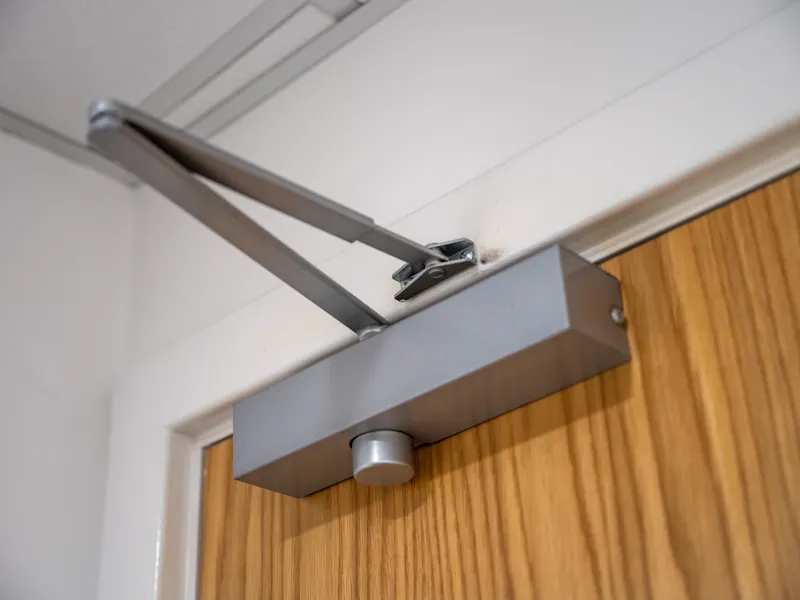
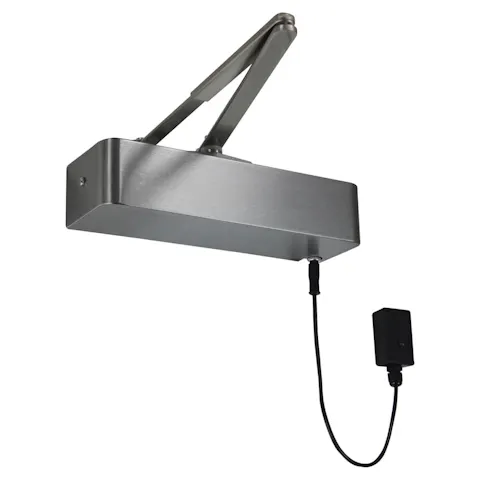
What are fire door closers and why are they important?
Fire door closers are used to automatically close doors after use. They help to maximise compliance, containing fire and smoke. Their importance lies in their ability to ensure doors close reliably in the event of a fire, keeping occupants safe and protected while maintaining fire compartmentation.
Do fire doors require self-closers?
Most fire doors should be fitted with a fire door self-closer to support fire safety performance, although requirements may vary. Fire door self-closers maximise compliance, safety, and accessibility across a range of buildings.
What should you consider when choosing a fire door closer?
When choosing a fire door closer, it’s important to consider these factors:
- Building type and traffic levels
- Accessibility requirements
- Installation flexibility
- Hold-open or free-swing functionality
- Fire testing and certification
Closers that claim fire resistance must be supported by extensive testing and assessment to demonstrate compliance with relevant standards. Extended Fields of Application (EXAP) provide third-party assurance that fire performance is maintained, even when products are used in variations outside of the original test conditions.
What fire door closers are suitable for high-traffic buildings?
Fire rated door closers in high-traffic buildings must be durable and reliable. The constant use and high footfall of these environments mean that long-term performance is incredibly important. Closers such as Rutland’s TS.9205 are ideal for high-traffic offices, schools, and commercial buildings. With 2 million cycles, a 35-year guarantee, and great adjustability for overcoming air pressures, these closers are designed to deliver consistent performance in demanding environments.
What fire door closers are suitable for hospitals and schools?
Fire door closers in hospitals and schools must prioritise accessibility and ease of use, while providing controlled, smooth operation. This is due to the range of needs of occupants in these buildings, meaning inclusive access must be ensured. Closers including Rutland’s TS.11205 offer strong latching action, BS 8300 compliance, and a slide arm design that helps reduce vandalism. With low opening force and efficient performance, these features create a safer and more accessible environment for all users.
What fire door closers are suitable for social housing?
Fire rated door closers for social housing environments are essential for safety and reliability. These buildings often have multiple occupants, and so must be equipped with compliant, robust hardware. Closers such as Rutland’s TS.11205 and TS.9205 prioritise durability, ease of use, and consistent performance, making them ideal for social housing settings.
What fire door closers are suitable for care homes and assisted living?
Fire door closers in care homes and assisted living environments must be easy to operate due to the needs of occupants. Closers such as Rutland’s Responder 24 offer free-swing mode for easy access and hold-open functionality. By prioritising accessibility and user comfort, they ensure these spaces are easy to navigate.
Surface mounted vs concealed fire door closers
Surface mounted and concealed fire door closers both control the closing of fire doors, but differ in their design, installation, and aesthetic impact.
Surface mounted fire door closers
- Visible design
- Easier installation
- More cost effective
- Easier to maintain
Concealed fire door closers
- Hidden design
- More aesthetic
- Harder to maintain
- More complex installation
Next steps for choosing the right fire door closer model
You’re now aware of which fire door closers suit different building types, and the features and considerations to look out for. Backed by years of experience supplying trade professionals with compliant fire door closers, we’re here to help you maximise compliance and prioritise safety regardless of your application.
FAQs
Why do fire doors need to be self-closing?
Fire doors need a fire door self-closer to maximise safety and compliance, containing fire and smoke and protecting escape routes. If fire doors weren’t self-closing, they’d be a safety risk, allowing fire and smoke to spread faster throughout a building.
What’s the difference between a fire door and a regular door?
Fire doors are designed to resist fire for a specified period and self-close, limiting the spread of fire and smoke, whereas regular doors do not offer fire resistance or self-closing functionality. It’s important to assess your building’s fire safety requirements to decide whether a fire door is necessary.
Why should fire doors always be closed when not in use?
Fire doors should always be closed when not in use to prevent any fire or smoke from escaping. This ensures that in the event of a fire occupants are kept safe and protected. Open fire doors can cause serious safety risks, potentially causing fire and smoke to spread rapidly through a building.