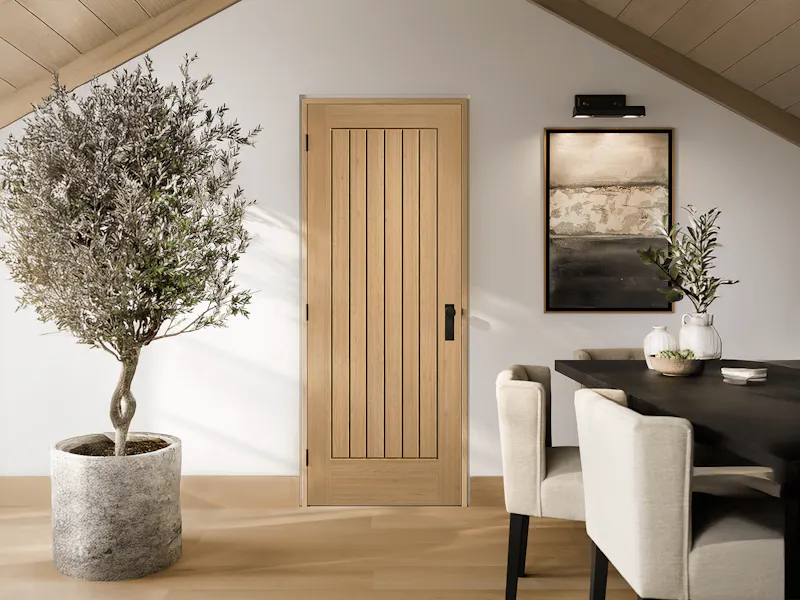
Why should I refinish internal wooden doors?
Refinishing internal wooden doors improves the appearance of the door and protects the wood from wear and tear. By extending the life of oak doors, homeowners can maintain their natural beauty and restore older or faded finishes. This is a cost-effective method in comparison to making replacements.
What tools and materials are needed to refinish internal wooden doors?
The tools and materials needed to refinish internal wooden doors include dust sheets and tarpaulin, paint brushes, paint rollers, scrapers, sandpaper and sanding blocks, cleaning sprays and wipes, sponges and cloths, and wood oils. Having the right tools when painting, staining, and oiling interior doors helps achieve a professional finish and makes preparation easier.
How to prepare internal wooden doors
Preparing internal wooden doors is an incredibly important step, regardless of whether the door will be painted, stained, or oiled. You should start by removing any hardware and cleaning the surface with cleaning sprays and wipes and sponges and cloths. Wood filler should be used to repair any dents, scratches, or imperfections in the door. If any loose paint is on the door, it should be scraped away, and the door should be sanded using sandpaper and blocks. For a smooth, professional finish, dust should be removed before applying any paint, stain, or oil. Performing these necessary preparation steps leads to a smoother, long-lasting finish.
How to paint internal wooden doors
Painting internal wooden doors instantly refreshes their appearance and helps protect the surface from everyday wear and tear. To achieve a professional finish, choosing suitable paint for interior wood surfaces is important. The door should be primed if required to create a smooth, even base. When painting interior doors, the panels, edges, and rails should be done so in that order, with multiple thin coats applied and drying times followed according to the manufacturer’s instructions.
How to stain internal wooden doors
Staining internal wooden doors enhances the natural grain of timber and adds colour. By choosing a suitable door stain that penetrates the wood and enhances the grain, applying the stain evenly across the door, and wiping away any excess product, a consistent finish can be achieved. Leaving appropriate drying times is important to ensure that the stain fully cures. Some doors may require additional coats if the desired depth has not been achieved.
How to oil internal wooden doors
To oil internal wooden doors, choosing an appropriate wood oil that enhances the natural appearance of timber is important. Applying thin coats and wiping away excess door oil is important to ensure an even finish and prevent surface build-up. Allowing appropriate drying times means that the oil can fully penetrate and protect the wood. Ongoing maintenance is important to ensure the wood’s natural character continues to be enhanced and the timber is protected.
Common mistakes to avoid when refinishing internal wooden doors
Common mistakes to avoid when painting, staining, and oiling internal wooden doors include skipping preparation, not properly sanding the door, and applying thick coats. Skipping preparation can lead to poor adhesion and uneven surfaces and not properly sanding or applying thick coats to the door can cause it to appear uneven. If the wrong brush or roller is used, streaks or brush marks can make the door look unfinished or messy. Failing to remove dust before finishing can also leave visible marks, and not allowing sufficient drying time can cause peeling or an uneven finish.
Next steps for painting, staining, and oiling internal wooden doors
You’re now aware of how to paint, stain, and oil internal wooden doors, and the benefits of doing this instead of making a full replacement. At IronmongeryDirect, we’re proud to provide our trade and DIY customers with high-quality tools and decorating equipment, helping to transform internal wooden doors with professional results.
FAQs
What is a pre-finished door?
Pre-finished doors are designed for easy installation, with a factory-applied, durable finish. They are popular due to their ready-to-install design and low-maintenance finish, meeting the needs of homeowners and trade professionals looking for a quick and convenient solution.
What is a door lining?
Door linings support the door frame, helping to create a neat finish around door openings and providing a surface for hanging the door. Available in various finishes, including white and oak, door linings provide a stable framework for installation and ensure a complete, professional internal door setup.
Do I need to prime wood doors before painting?
Whether you need to prime wood doors before painting depends on the door type and condition. If surfaces have been previously painted and are in good condition, they may only require cleaning and light sanding before painting. Primed doors are likely to be more necessary for new unfinished timber, repaired areas, and if a significant colour change is required. Adding primer helps to improve adhesion and create a more even finish, so it’s recommended for applications where better coverage and long-lasting results are needed.
Can you paint over painted wooden doors?
Yes, you can usually paint over painted wooden doors. When painting these interior doors, it’s important to clean, sand, and repair any damaged areas before applying new paint. Performing proper preparation is key for a smooth and professional finish.
Is it better to paint wood doors with a roller or brush?
Whether it’s better to paint wood doors with a roller or brush will depend on the door design and level of detail involved. Rollers are great for creating a smooth finish on large flat areas, whereas brushes are perfect for edges, mouldings, panels, and more detailed sections of the door. It’s likely that a combination of both tools will create a cohesive and professional finish when painting internal wooden doors.
What is LPD Doors?
LPD Doors is a trusted UK door manufacturer, specialising in high-quality internal and external doors. Using high-quality materials and craftsmanship, LPD Doors offers reliable solutions for residential and commercial projects.