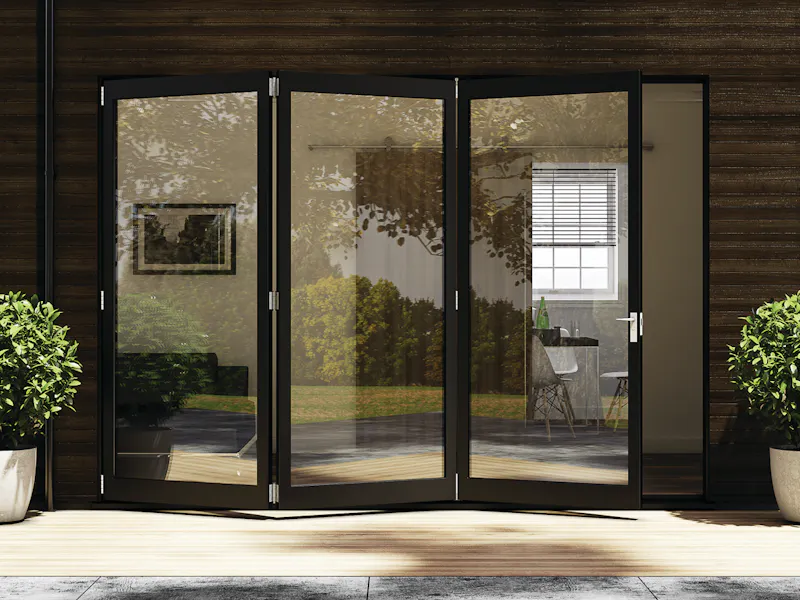
What’s the difference between sliding and bifold doors?
One of the biggest differences between sliding and bifold doors is their operation, with sliding doors gliding on a track and bifold doors stacking to one or both sides of the frame. Evaluating your design preferences is essential to determine if a sliding or bifold door system is better suited to your space.
What are the pros and cons of sliding doors?
Pros
- Saves space
- Offers a modern, sleek look
- Ideal for large glass panels
- Allows natural light to enter
Cons
- Requires regular maintenance
- Tracks can collect dirt and debris
What are the pros and cons of bifold doors?
Pros
- Creates a practical, fully openable wall
- Allows natural light to enter
- Provides seamless access to outdoor spaces
Cons
- Often more expensive
- Requires space for stacking panels
Which is better for small spaces?
Sliding doors are often the better choice for small spaces, due to their space-saving track design. With no swing radius, they allow furniture to be placed close to them. Bifold doors require space to stack their panels, which means they’ll be slightly more restrictive in small spaces.
Which doors let in more natural light?
Bifold doors can allow more light when fully open, creating a seamless connection to the outdoors. Sliding doors also often feature large glass panels, which can maximise light. Both door systems let in a considerable amount of natural light, making rooms feel brighter and more spacious.
Which is cheaper: sliding or bifold doors?
Sliding doors are typically a cheaper option than bifold doors, due to their simpler design and generally less complex installation. The price of bifold doors is dependent on the construction, finishes, and size of the door, with more premium doors often coming with higher-quality materials, enhanced glazing, and more robust hardware.
Next steps for choosing bifold or sliding doors
You’re now aware of the differences between sliding and bifold doors, as well as each door system’s pros and cons. All that’s left to do now is to decide which option best suits your space, considering your practical and style requirements. We’re backed by experience supplying trade and DIY customers with high-quality sliding door kits and bifold door kits, providing the hardware needed for successful installations.
FAQs
What are common problems with sliding doors?
Common sliding door problems include dirt and debris getting caught in the door tracks. This is a result of a lack of maintenance, which is essential to ensure your sliding door performs as intended over time. Misalignment and sticking doors are also common sliding door problems, which can be resolved with regular cleaning, lubrication, and adjustment.
What are the disadvantages of sliding glass doors?
The disadvantages of sliding glass doors include visible marks and regular maintenance needed. Older and lower-quality sliding doors can also raise security concerns, but modern door systems typically include multi-point locking for enhanced security.
What are the common problems with bifold doors?
Common bifold door problems include misalignment, sticking or jamming, and loose or broken hinges. By carrying out regular cleaning, lubrication, and tightening of hinges, your bifold doors are more likely to perform as expected.
Should I get bifold doors or sliding doors?
The decision to get bifold doors or sliding doors is dependent on your room’s function, design preferences, and practical requirements. If saving space is a priority and you want to achieve a modern, clean look, sliding doors are the better choice. On the other hand, if you’re looking to allow maximum light in and create a seamless transition to outdoor space, bifold doors are a great choice.
Can you replace bifold doors with sliding doors?
Yes, it is possible to replace bifold doors with sliding doors. Doing this in the safest way is important and involves removing the old doors, installing a sliding track, and carefully fitting the new doors.