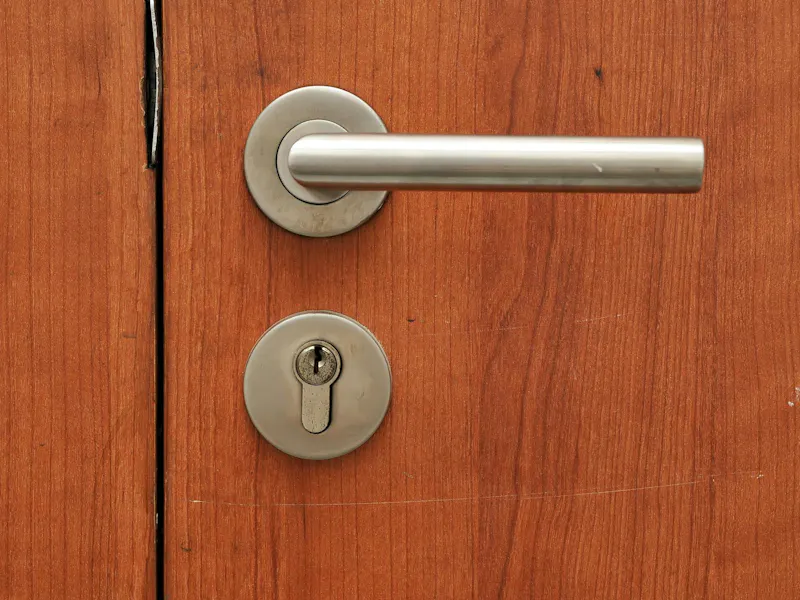
What is the difference been Lever on Rose and Lever on Backplate door handles?
Lever on Rose and Lever on Backplate door handles differ due to their design and fixing plates, with Lever on Rose handles featuring a small circular or square rose and Lever on Backplate handles featuring an elongated rectangular backplate.
Fixings
One of the biggest differences between these two types of door handles are if the fixings are visible or not. In the case of Lever on Backplate, the fixings are visible, but the fixings on Lever on Rose Door Handles are hidden, resulting in a cleaner finish.
Shape of Plate
Lever on Rose Handles feature a circulate plate, whereas the plates on Lever on Backplate Handles are usually rectangular. You can find both longer and shorter plates for Lever on Backplate Handles depending on your preference.
Back to Back Fixings
A unique feature of Lever on Rose Door Handles is the inclusion of Back to Back Fixings, which consists of two bolts that connect both handles through the door and pass through the latch. The benefit of Back to Back Fixings is that the handle is more securely fit to the door, as well as a lower likelihood of issues when being installed on to thinner doors.
How to install a Lever on Rose Door Handle
A lever on rose door handle is incredibly easy to install, with most if not all products including all of the fixings you will need for a complete installation.
Step 1:
Firstly, remove the outer rose off of the handle, make sure you do this carefully as to not compromise the finish.
Step 2:
Next, insert the spindle in to one of the levers, depending on spindle type it may have a groove which needs to be aligned with the grub screw, which is located on the neck of the handle. If the spindle has no groove it can be inserted any way.
Once everything is lined up correctly, secure the lever to the door using the grub screw, making sure that the spindle has enough projection to go all the way through the door to the other handle.
Step 3:
After this, insert the spindle in to the lock/latch follower, making sure that the lever is the correct way up – this should result in the inner rose being flat against the face of the door.
Step 4:
Finally, insert the male bolts through the inner rose to meet up with the female bolts on the other side of the door, then tighten the bolts. It is important to not force the bolts so as not to cross the threads if not correctly aligned.
Once this is completed, you can then replace the outer roses on both sides, which will be either push of screw fitted.
How to install a Lever on Backplate Door Handle
The installation method for lever on backplate door handles varies slightly depending on the type of handle. Typically, there are 3 types: Lever latch on backplate, lever lock on backplate and bathroom lock/lever on backplate.
Common Instructions:
There are some installation steps that are applicable to all versions of a Lever on Backplate Door Handle, which are as follows:
- Locate the spindle through the hole in the door latch or lock, then fit the backplates onto the spindle bar on to each side of the door
- Ensure that the spindle is level before any of the next steps otherwise this will cause difficulty in handle operation and can damage the lock
- Mark up the screw holes, using a bradawl to create indentations to make the insertion of screws easier
- Remove backplates and spindle bar
- Drill pilot holes preparing for the insertion of the screws
- Install the backplate, locating spindle through the follower in the door lock/latch, make sure there is enough projection of spindle on either side of the door
- If the model of Door Handle you’re installing contains a grub screw, tighten that screw to secure the spindle to the door
- When all components are aligned, install the screws
Additional Steps: Lever Lock/Bathroom Lever on Backplate
- Check the bathroom lock to ensure it is correct, both that it is compatible with the size of spindle bar, and check that the door has been drilled correctly and prior to installation
- Using a grub screw and allen key (sometimes provided) – secure the bathroom lock in to place
Choosing the correct type and knowing how to install these common types of Door Handles in their various models is vital to ensuring interior doors operate as they should. If you’re looking to fit handles for a new project, or upgrading existing ones, you can find products in a variety of sizes, designs and finishes, so you’ll end up with the perfect choice every time.
FAQs
How do lever on rose handles attach to a door?
Lever on rose handles are typically secured using bolt-through fixings or screws. Bolt-through fixings pass through the door to connect both handles, creating a clamping effect.
Which is better for hollow-core internal doors: rose or backplate?
Lever on backplate handles are generally more suitable for hollow-core internal doors, due to their larger backplate which provides a wider fixing area. Lever on rose handles can be installed on hollow-core doors, but it's important to choose a suitable fixing method, such as bolt-through fixings to help prevent the handles becoming loose.
Are lever on rose handles compatible with existing mortise latches?
Lever on rose handles are often compatible with existing mortise latches, but its important to check that the fixing method is suitable for the door and that the existing latch is compatible with the handle.
Do lever on rose handles require separate keyhole covers (escutcheons)?
Lever on rose handles do require separate keyhole covers (escutcheons) for doors with a key lock. Bathroom doors typically require a separate privacy turn and release fitting, while standard internal doors that latch shut do not need them.
Can lever on rose handles be fitted to hollow-core doors?
Lever on rose handles can be fitted to hollow-core doors if an appropriate fixing method is used, such as bolt-through fixings. Relying on standard wood screws alone could cause the fixings to become loose over time.